Insights into parcel delivery with eCargo bikes at the Delivery Service Partner in the Amazon Microhub in Berlin
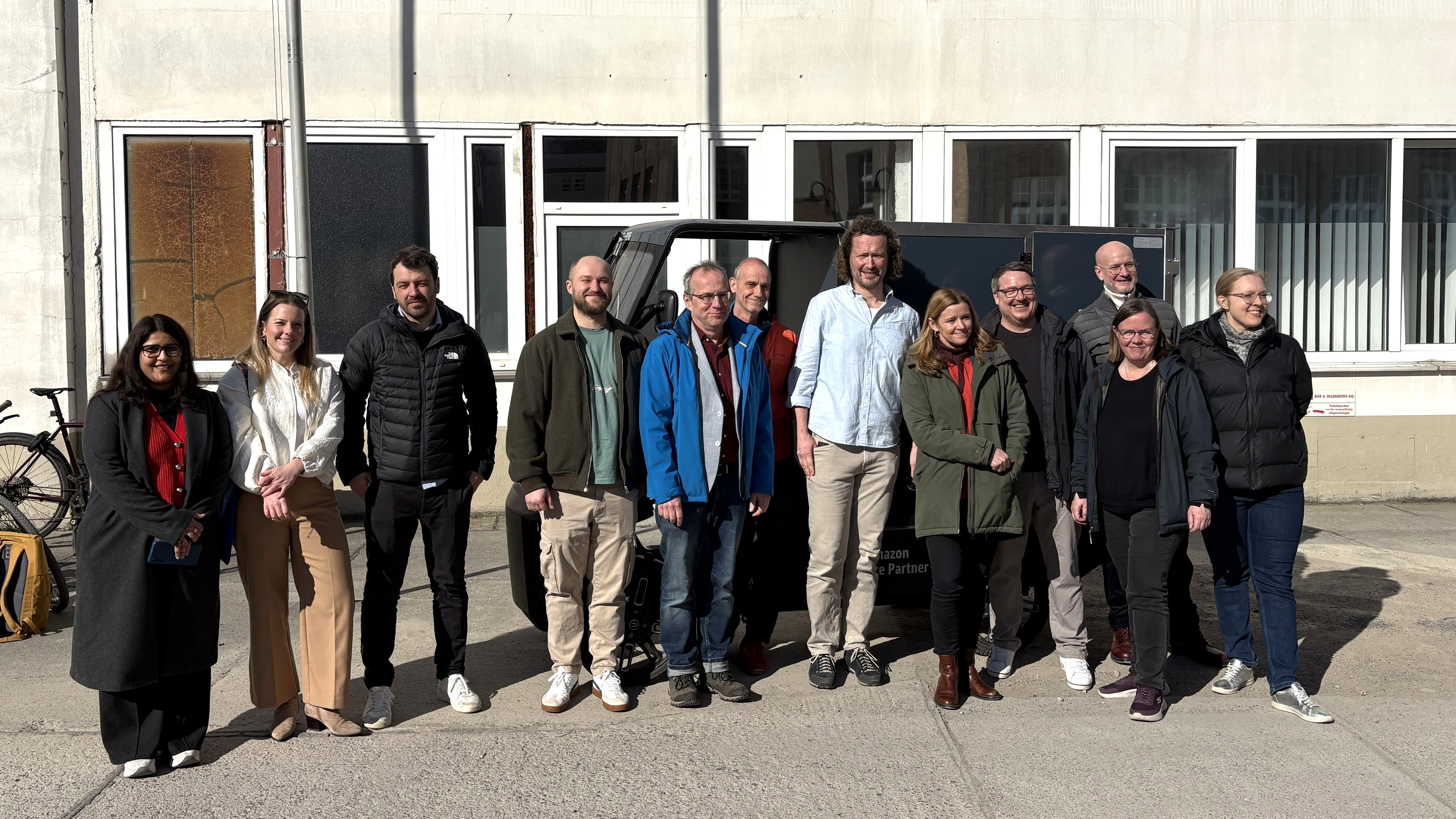
How does urban parcel delivery with eCargo bikes work in practice? During a visit to the Amazon Microhub in the Bouché Höfe in Berlin, representatives from politics and business gained insights into the operational processes of a Delivery Service Partner (DSP) and the organization of modern city logistics.

The focus of the visit was not only the hub infrastructure itself, but especially the processes of the Delivery Service Partner (DSP), who is responsible for the operational delivery on site. The meeting provided a valuable opportunity to experience the practical challenges and potential of urban logistics at first hand.
The Location: Microhub as a Key Element of the Last Mile
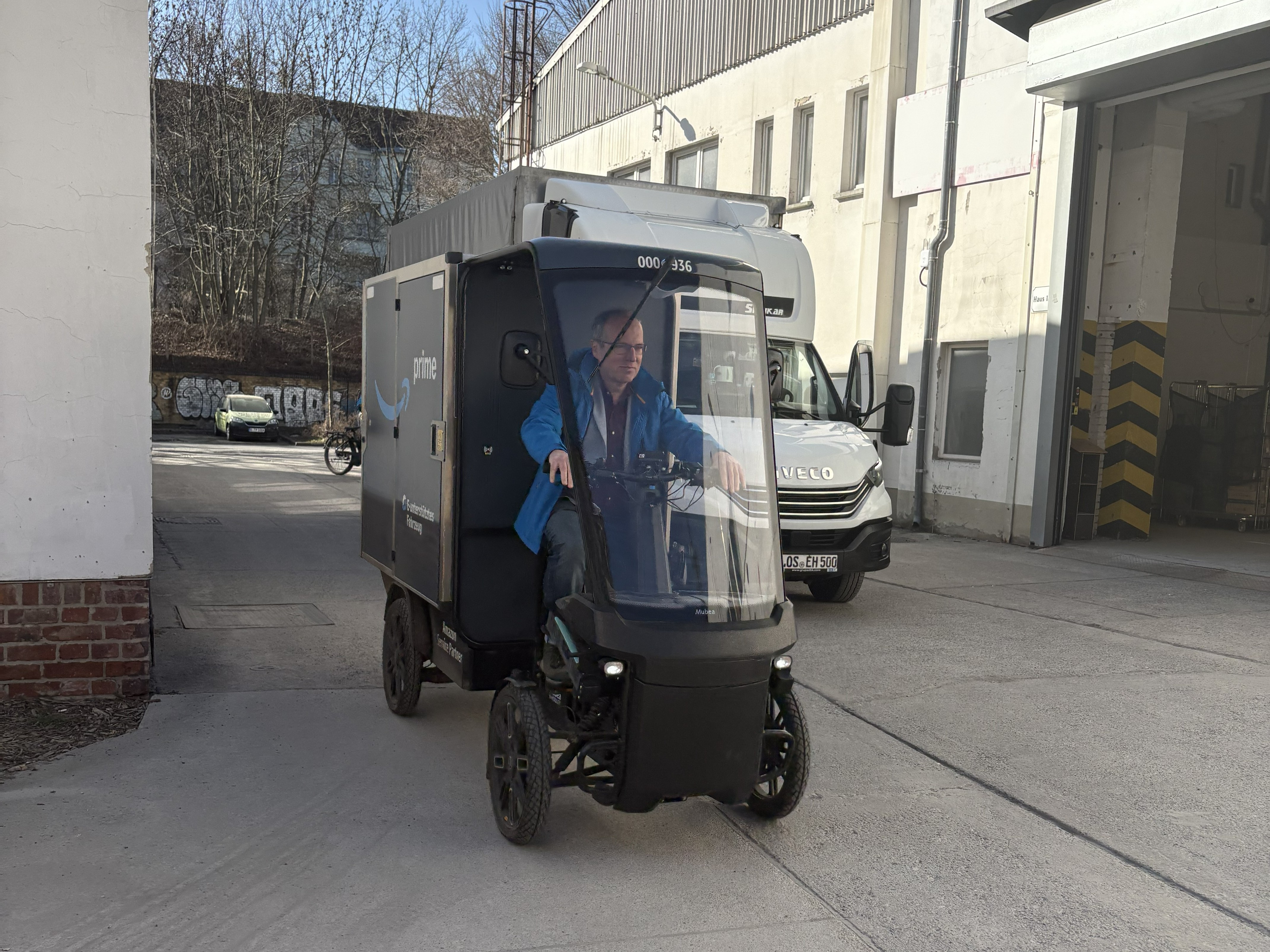
Microhubs are a central component of modern urban logistics. They serve as inner-city consolidation points where parcels are bundled and then delivered emission-free on the last mile using electric cargo bikes.
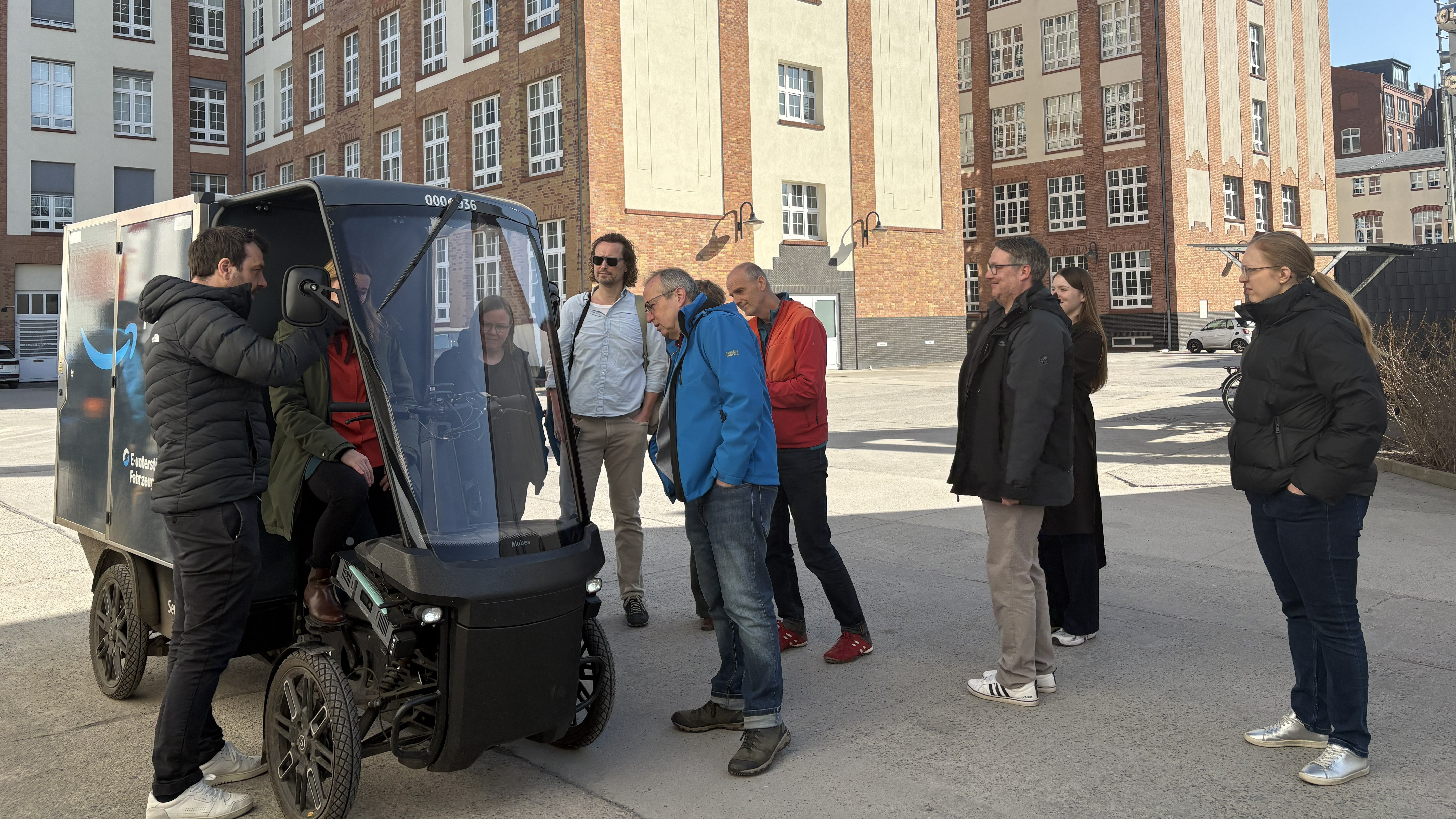
At the Microhub in the Bouché Höfe, guests received a compact overview of the processes behind urban parcel delivery – from the arrival of parcels to the start of delivery tours with electric cargo bikes. The visit clearly illustrated the role microhubs play as inner-city logistics nodes in modern supply chains.
Delivery Service Partner: The People Behind Urban Deliveries
A special focus of the visit was the work of the local Delivery Service Partner. Guests gained insights into the organization of the team as well as the daily routines of the drivers.
The DSP introduced its employees and operational workflows. Particularly impressive was the international composition of the team – people from many different nationalities work together here to handle urban deliveries.
One practical challenge also became apparent: driving licences issued in many foreign countries are not recognized in Germany. This is where an important advantage of electric cargo bikes becomes clear in urban logistics. Since eCargo bikes can be operated without a driver’s licence, they open up access to paid employment for many more people in cities such as Berlin.
Driver Training: Safety Comes First
Before new drivers start their first delivery tour, they go through a structured training program. The process is clearly defined: road safety training on a bicycle, instruction and training on the electric cargo bike, and only then deployment in real urban traffic.
This step-by-step training ensures that drivers first become familiar with the fundamental traffic rules and then with handling the vehicles before operating in city traffic.
Organization of Delivery Tours
Another insight from the visit was the organization of daily delivery tours.
Once preparations in the hub are completed, drivers start their routes into the surrounding urban area. The coordinated departure of the eCargo bikes demonstrates how well the processes within a microhub are aligned.
Exchange with Politics: Infrastructure and Regulatory Frameworks
Following the tour, an intensive exchange took place with members of the Berlin House of Representatives Oda Hassepaß, Catrin Wahlen and Andreas Otto, as well as their staff.
All participants showed a strong understanding of regulatory requirements, infrastructure challenges and the needs of urban logistics. Accordingly, the discussion was in-depth – ranging from the integration of cargo bikes into urban traffic to the space requirements for microhubs and the regulatory framework for the sector.
The open dialogue between practice and politics is an important step in further developing sustainable logistics solutions in cities.
Conclusion: Shaping the Mobility of Cities Together
Meetings like this demonstrate how important the exchange between policymakers, industry and logistics service providers is. Only through dialogue and practical insights can sustainable solutions for urban mobility continue to evolve.
Microhubs and electric cargo bikes are already an important part of modern city logistics – and will play an even greater role in the future.
We would like to thank all participants for their great interest, the engaging discussions and the valuable impulses for the further development of sustainable urban logistics.