Amazon opens third microhub in Berlin – urban delivery with Mubea eCargo bikes continues to grow
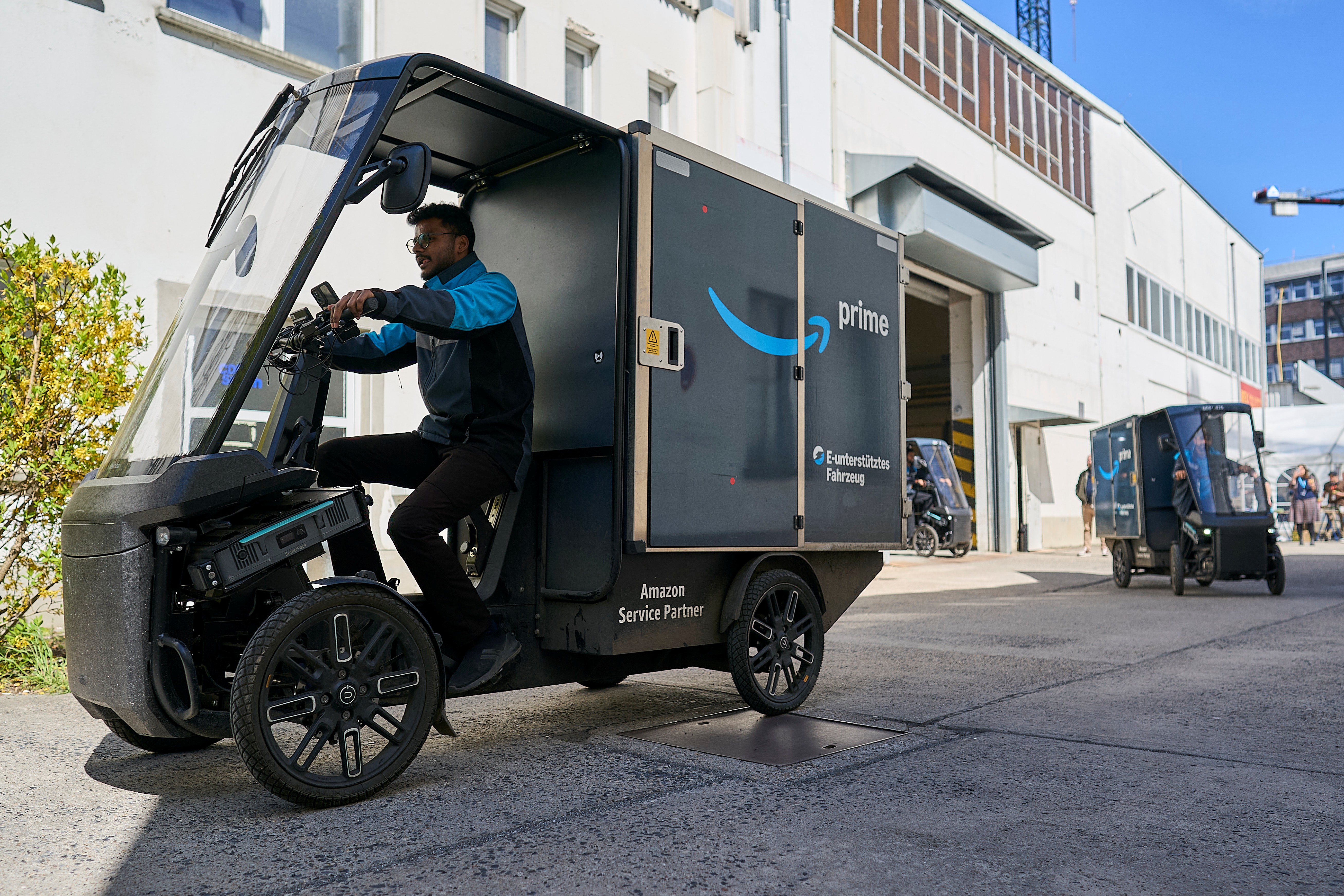
Urban logistics is undergoing a significant transformation. With the opening of a third microhub in Berlin, Amazon is further expanding its micromobility strategy, increasingly relying on electric cargo bikes from Mubea U-Mobility.

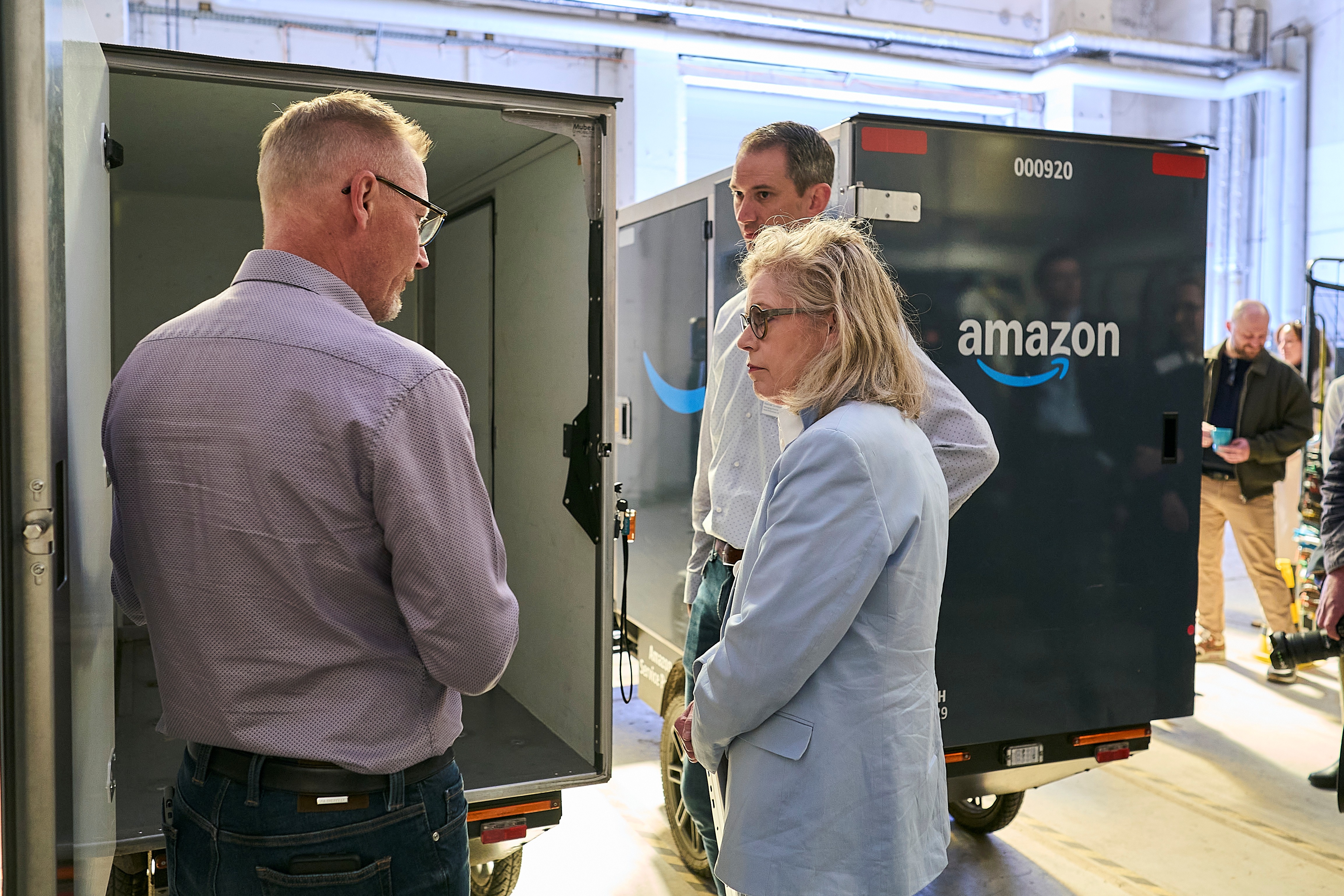
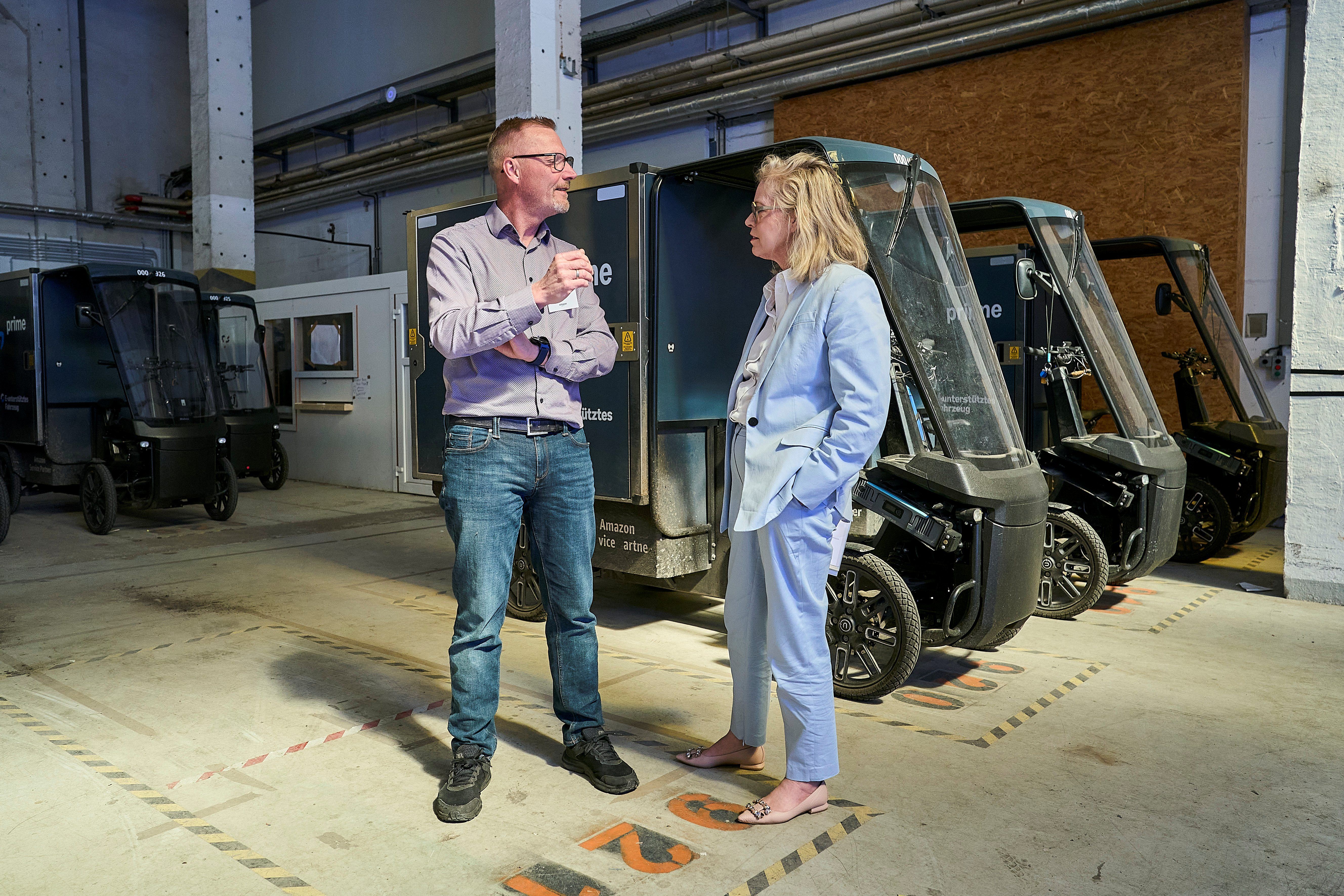
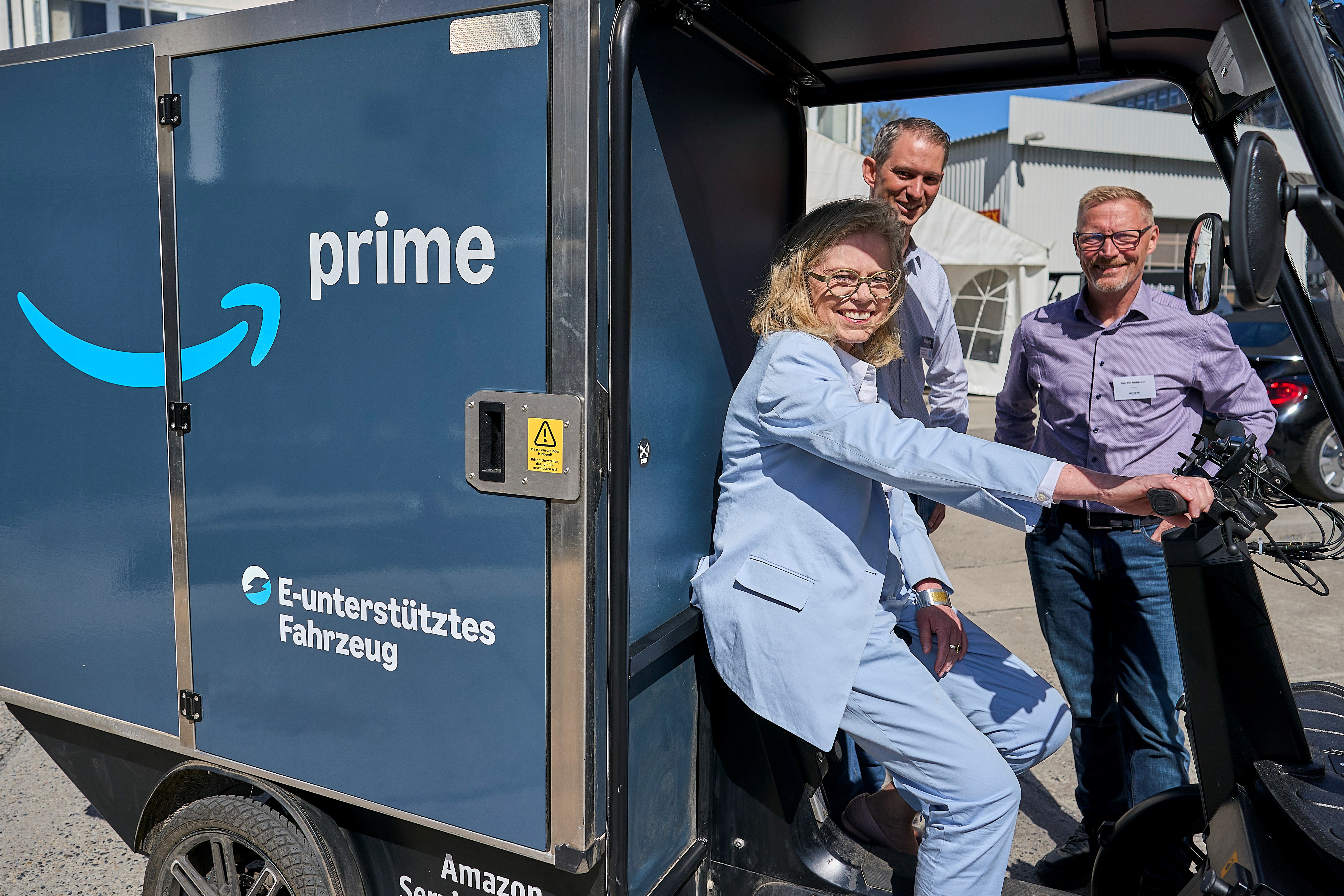
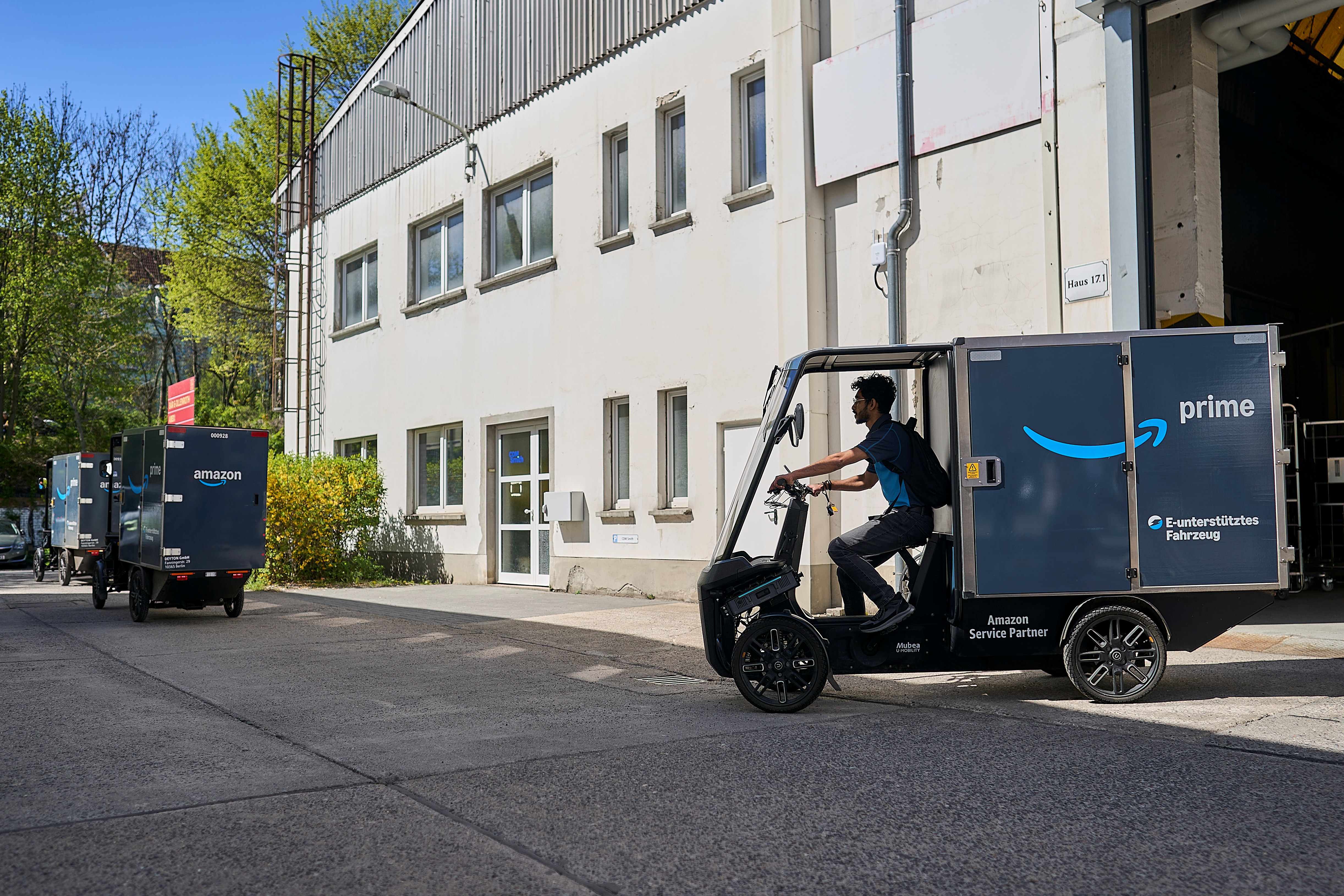
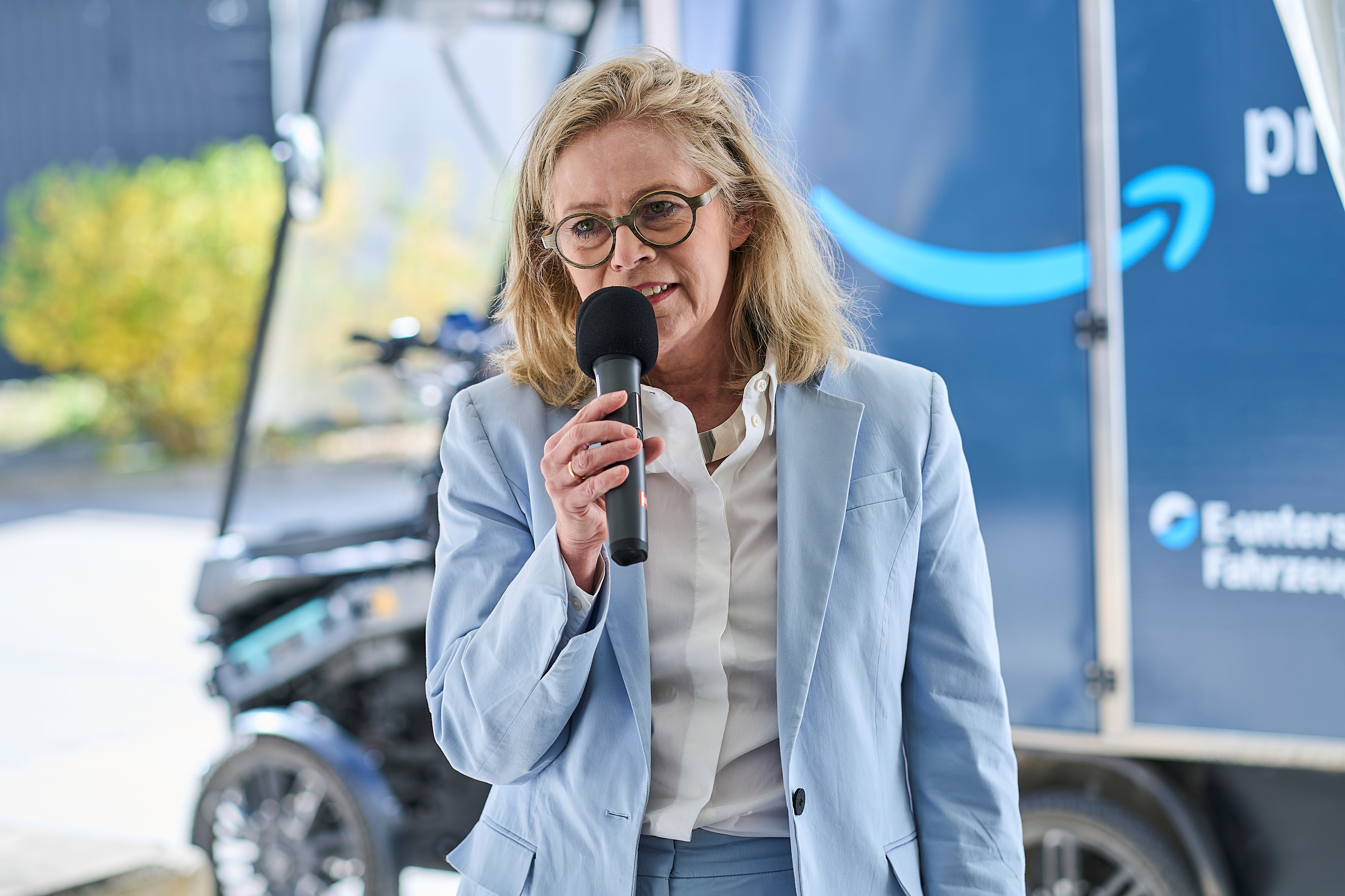
Together with Amazon and Mubea, Berlin’s Senator for Mobility, Transport, Climate Protection and the Environment, Ute Bonde, inaugurated a new micromobility hub at MotionLab Berlin. From this microhub, parcels are consolidated and distributed to surrounding neighborhoods in a low-emission way using eCargo bikes.
During the opening, Ute Bonde emphasized: “Every parcel delivered by bike instead of a van reduces traffic and emissions in our city.”
Micromobility at Amazon: data highlights the shift in urban logistics
Recent developments show that micromobility has become scalable:
- By early 2026, Amazon and its delivery partners had delivered more than 100 million parcels across Europe using electric cargo bikes, e-mopeds, and push carts – over 10 million of them in Germany.
- In Berlin, Amazon’s delivery partners plan to deliver more than 2 million parcels annually using electric cargo bikes.
- In Germany, Amazon and its partners already offer cargo bike deliveries in twelve cities.
- Across Europe, Amazon operates more than 70 micromobility hubs in over 50 cities.
- Throughout 2026, Amazon plans to open 25 additional micromobility hubs in Europe.
These figures clearly illustrate a shift in inner-city logistics—from traditional delivery vans to flexible, decentralized, and sustainable delivery models.
eCargo bikes as a key technology for urban logistics
At the heart of this concept are electrically assisted cargo bikes – including solutions from Mubea U-Mobility. They are among the most efficient options for short-distance deliveries, particularly in densely populated cities like Berlin.
Konrad Schlösser, Managing Director and Head of Business Unit Micromobility at Mubea U-Mobility, explains: “Our collaboration with Amazon demonstrates how automotive engineering excellence can transform urban logistics. Our eCargo bikes for last-mile delivery combine durability, efficiency, and zero emissions – proving that sustainable delivery solutions can meet the demands of modern urban logistics.”
In urban operations, this results in clear advantages:
- Use of bike lanes and side streets
- Independence from congestion and parking constraints
- Direct delivery close to the doorstep
- High efficiency over short distances
- Reduced CO₂ emissions and noise pollution
Especially in dense urban environments, electric cargo bikes are not just a complement to traditional delivery vehicles—they can outperform them both economically and environmentally in many use cases.
Microhubs and eCargo bikes: a scalable system for urban supply chains
The continued expansion of micromobility shows that microhubs combined with eCargo bikes are becoming a new standard for urban delivery.
This system enables:
- Shorter delivery distances
- Faster delivery times
- Reduced traffic congestion
- Better scalability in urban environments
For Mubea U-Mobility, the deployment in Berlin reinforces its mission: to develop practical, scalable, and economically viable solutions tailored to real-world urban requirements—helping companies future-proof their fleets.
Conclusion: the future of urban delivery
The new microhub in Berlin demonstrates how modern delivery concepts can work in cities: locally organized, electrically powered, and efficiently managed. The combination of microhub infrastructure and high-performance electric cargo bikes presents a clearly scalable model for sustainable urban logistics.